Foreign Afairs Unit
EXECUTIVE SUMMARY
South Africa stands less than a week away from potential expulsion from the African Growth and Opportunity Act (AGOA).
President Cyril Ramaphosa on 19 October 2026 warned the nation to “prepare for the worst.”
This commentary argues that the impending loss is not a trade technicality. It is a direct consequence of a failed foreign policy doctrine that sought non-alignment but practiced strategic ambiguity — alienating a high-value market (the United States) to signal loyalty to low-value markets (Russia, Iran) that purchase only raw materials.
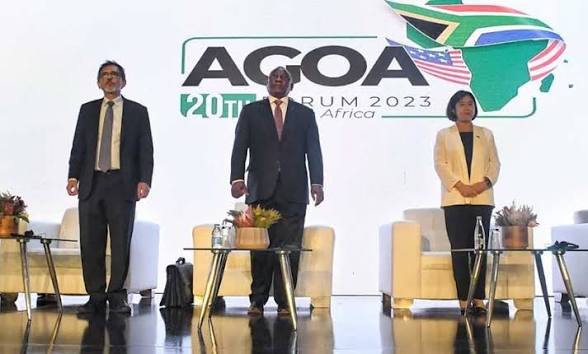
AGOA matters because it is the only US trade instrument that rewards South African industrialization.
Losing it will cost South Africa between 125,000 and 576,000 jobs and destroy 30 years of industrial
capacity. The lesson for Pretoria is clear: trade is now foreign policy, and the two must be aligned.
Foreign policy without economic calculation is not non-alignment; it is self-sabotage.
1. WHAT IS AGOA AND WHY IT MATTERS
Enacted in 2000, AGOA provides duty-free access to the US market for 6,800 products from eligible subSaharan African countries.
For South Africa, it has been the single most important trade preference: South Africa accounted for 54% of all AGOA exports to the US over 25 years — the largest beneficiary.
22% of SA’s exports to the US entered under AGOA. In the last five years alone, that was R300 billion in value.
AGOA supports high value-added industries — automobiles, chemicals, apparel, wine, citrus and agroprocessing — which create formal jobs.
Economic modelling by Aluma Capital places 125,000 to 576,000 jobs at risk. The automotive sector exported over $2 billion in 2024, but after new US tarifs, volumes collapsed from 25,500 units to 6,500 units in 2025.
In the Western Cape alone, AGOA underpins R12.98 billion in provincial GDP and 47,000 jobs. Juice exports down 86%, grapes down 79%, wine down 38% in the last 12 months.
Crucially, South Africa runs a trade surplus with the US and sells to the world’s highest-margin consumer.
This cannot be replaced by Russia, which has an economy smaller than Italy at $2.56 trillion.
2. WHY EXPULSION IS IMMINENT
Although Congress extended AGOA until December 2028, eligibility is reviewed annually by the Executive. Under US law, 60 days’ notice must be given for removal. For removal on 1 January 2027, that deadline is 2 November 2026 — next week.
Two bills were introduced in the US Senate and House in 2025 calling for a full review of US-SA relations.
The Senate bill explicitly called for revoking AGOA, citing “anti-US foreign policy stance.” The US Trade Representative has stated he is “open to exclusion.”
Congress may have voted to keep SA in AGOA, but as President Ramaphosa noted: “What now remains is the executive.”
3. THE ROOT CAUSE: A FAILURE OF STRATEGIC CLARITY
The Business Leadership South Africa (BLSA) correctly observed:
“Foreign policy decisions have direct economic consequences, and ambiguity rarely serves national interests.”
The Zambezi Institute identifies five foreign policy failures that triggered the review:
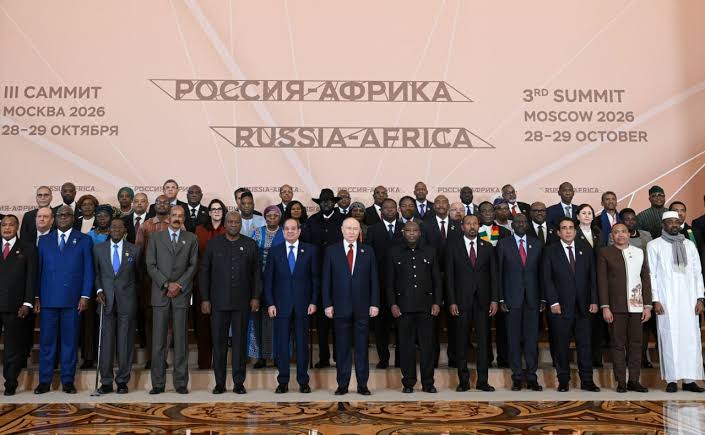
a) The Russia Factor: The 2022 Lady R vessel incident (alleged arms transfer), joint naval exercises with Russia (Exercise Mosi),refusal to vote against Russia at the UN, and continued high-level engagement with President Putin, including at the BRICS Summit in New Delhi, September 2026.
b) The Iran Alignment: Maintaining close ties with Iran, designated by Washington as a strategic competitor, while deepening alignment within an expanded BRICS.
c) The Israel Genocide Campaign: South Africa put itself at the centre of the international campaign accusing Israel of genocide, filing its case at the International Court of Justice in December 2023. In ourview, that campaign served propaganda more than law.
The war it put on trial began when Israel was attacked first. On 7 October 2023, Hamas killed about 1,200 people in Israel and took some 250 hostages. Israel responded, and the war spread to Hamas’s allies and backers — Hezbollah in Lebanon and, finally, Iran. On 28 February 2026, Israeli strikes backed by the United States killed Iran’s Supreme Leader, Ayatollah Ali Khamenei.
The ICJ has made no finding of genocide. Its orders so far are interim measures, and written pleadings will not close until May 2029. Yet Pretoria spoke as if the verdict were already in, while keeping close ties with Tehran, the regime at the end of that chain. Washington, Israel’s closest ally,read this as a hostile act.
When it froze aid to South Africa in February 2025, it cited the ICJ case alongside the Expropriation Act.
Domestic Policy Weaponized Abroad:
The Expropriation Act and B-BBEE laws were framed by the Trump Administration as “race-based discrimination.” This narrative was used to justify cutting aid, expelling South Africa’s ambassador, imposing visa restrictions, and launching a refugee program that resettled 16,287 Afrikaners in one year — all while citing “white genocide,” a claim Pretoria rejects but failed to counter strategically.
e) Undiplomatic Diplomacy: The public exchange where Minister Ronald Lamola told US Ambassador Leo Brent Bozell III to “get out the kitchen” if unwilling to dialogue. Trade union Solidarity and Business Unity SA have warned such rhetoric deepens the rift and is viewed as hostile in Washington.
The result is that South Africa attempted to be non-aligned, but achieved multi-misalignment — losing trust in Washington without gaining market access in Moscow.
4. TRADE IS THE NEW FOREIGN POLICY
In the 20th century, foreign policy was conducted with treaties, votes and speeches. In the 21st, it is conducted with tarifs,sanctions, export controls and market access. Washington no longer keeps the two apart: a vote at the UN, a naval exercise or a court case now arrives at the border as a tariff line.
South Africa is already paying. Some South African products face a 12.5% US tariff under a Section 301 action imposed this year. Losing AGOA would add the standard most-favoured-nation tariff of about 3.4%, taking those goods to 15.9%, according to Agbiz chief economist Wandile Sihlobo. Every point lands on a farm in the Western Cape or an assembly line in the Eastern Cape.
South Africa cannot run trade policy from the dtic and foreign policy from DIRCO as if they served two diferent countries. The two must be aligned:
1. Every foreign policy move carries a trade price tag: Before a major vote, court case, military exercise or state visit, government must ask what it will cost in markets, jobs and investment — and say so openly.
2. One economic diplomacy command: DIRCO and the dtic should answer to a single economic diplomacy council in the Presidency,so that every embassy works to the same export and investment targets.
3. Principles, priced honestly: South Africa can keep its principles. But if a position will cost 100,000 jobs, Parliament and the public deserve to know that before it is taken, not after the bill arrives.
4. Industrialization needs markets, not slogans: AGOA is the only framework that pays for South African factories. BRICS pays for mines.
5. Markets before applause: South Africa must not sacrifice access to a $30 trillion consumer market for ideological applause. Pragmatism is not betrayal; it is the national interest.
5. RECOMMENDATIONS OF THE ZAMBEZI INSTITUTE
1. Engage at the top, now: Urgent bilateral engagement at Head of State level to separate AGOA eligibility from geopolitical disputes. Ofer IP treaty compliance and a bilateral trade chapter.
2. Lower the temperature: De-escalate rhetoric and re-establish ambassadorial channels.
Build the machinery: Establish a Presidential Economic Diplomacy Council joining DIRCO, the dtic and Treasury, with a trade-impact test for every major foreign policy decision.
4. Measure diplomats on results: Judge ambassadors by exports opened and investment secured, not only by statements issued.
5. Separate principle from provocation: Pursue legal and moral positions through quiet, consistent multilateral channels, without turning them into public campaigns against a major trading partner’s closest allies.
CONCLUSION
AGOA’s possible loss proves that foreign policy is not a speech at the UN. It is jobs in Uitenhage, grapes in Hex River, and wine in Stellenbosch.
South Africa does not need to choose between East and West. It needs to choose its own interest. That means building industries, not just alliances; selling products, not just positions.
Trade is now foreign policy by other means. Pretoria can keep its voice in the world, but it must stop paying for that voice with its own factories.
ABOUT THE ZAMBEZI INSTITUTE
The Zambezi Institute is a global think tank based in Harare, Lusaka and Accra. It believes in the free flow of opinions and
ideas to shape the future and the peace of the world. Its Foreign Afairs & Geopolitical Economy Unit analyzes the
intersection of sovereignty, trade, and power.
Contact: foreignafairs@zambeziinstitute.org