

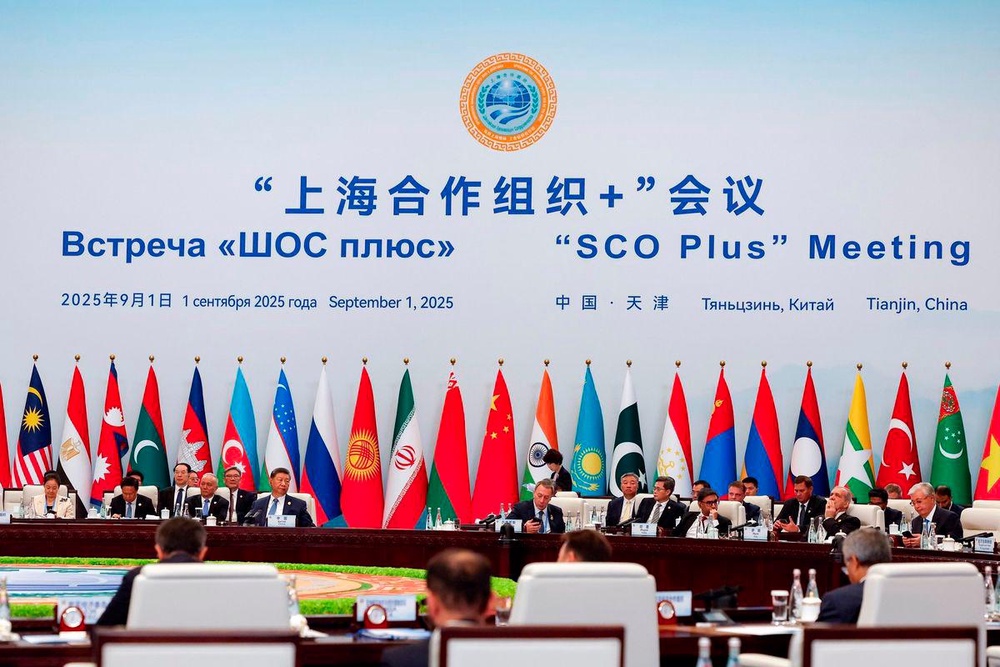
The contemporary international system demands a fundamental recalibration of United States foreign policy priorities. Rather than pursuing a containment-oriented strategy focused primarily on the Sino-Russian entente, Washington should adopt a more nuanced approach centered on deepening strategic partnerships with pivotal middle powers, particularly India, while simultaneously expanding engagement across the Global South through multifaceted diplomatic instruments.
India as a Pivotal Strategic Partner
India’s emergence as a consequential power stems from the confluence of demographic dividends, geographic advantages, and accelerating economic transformation. Its position astride critical maritime chokepoints, combined with a domestic market approaching 1.4 billion consumers, positions New Delhi as an indispensable node in any sustainable Indo-Pacific architecture. However, India’s historical commitment to strategic autonomy—rooted in its non-aligned movement legacy—requires American policymakers to eschew zero-sum thinking in favor of collaborative frameworks that respect Indian sovereignty while advancing mutual interests.
The persistence of robust Indo-Russian ties, particularly in defense procurement and energy cooperation, underscores the fragility of assuming automatic Indian alignment with American priorities. Moscow’s cultivation of New Delhi through reliable arms transfers, energy partnerships, and diplomatic support has created enduring institutional linkages that cannot be easily displaced through coercive measures or ultimatums.
Reassessing the Sino-Russian Strategic Partnership
While the deepening Sino-Russian partnership represents a significant geopolitical development, its structural limitations warrant careful analysis. Both Beijing and Moscow harbor deep-seated concerns about subordination to their counterpart’s strategic vision. China’s reluctance to provide substantial military assistance to Russia’s operations in Ukraine, coupled with continued Chinese adherence to secondary sanctions regimes, demonstrates the boundaries of their coordination.
Moreover, historical precedent suggests that partnerships of convenience between major powers often prove brittle under sustained pressure. The structural asymmetries between China and Russia—particularly China’s overwhelming economic superiority—may generate tensions as their relationship matures, creating opportunities for sophisticated American diplomatic engagement.
Institutionalizing Comprehensive Engagement Strategies
Effective American strategy requires moving beyond transactional approaches toward comprehensive engagement architectures encompassing multiple domains:
Economic Integration: Developing robust trade and investment frameworks that create mutual dependencies while respecting partner nations’ development priorities. This includes supporting infrastructure development, technology transfer agreements, and market access initiatives that demonstrate tangible benefits from partnership with the United States.
Technological Collaboration: Establishing joint research initiatives, academic exchanges, and innovation partnerships that leverage American technological capabilities while building indigenous capacities in partner nations. Such arrangements should emphasize knowledge-sharing rather than dependency relationships.
Diplomatic Architecture: Creating institutionalized dialogue mechanisms that provide regular forums for addressing grievances, coordinating policies, and exploring collaborative opportunities. These should operate at multiple levels, from leader-to-leader engagement to working-level technical cooperation.
The Global South Imperative
The reconfiguration of global economic gravity toward emerging markets necessitates a fundamental reorientation of American engagement strategies. The Global South—encompassing dynamic economies across Asia, Africa, and Latin America—represents both the primary arena for future economic growth and the decisive battleground for influence among major powers.
American engagement with these regions should prioritize:
Economic Partnership: Facilitating access to American markets, investment capital, and technological capabilities while supporting indigenous development priorities. This approach should emphasize mutual benefit rather than extractive relationships.
Institutional Participation: Supporting Global South leadership in international institutions while working to reform existing architectures to reflect contemporary power distributions.
Capacity Building: Investing in human capital development, institutional strengthening, and technological capabilities that enhance partner nations’ agency in the international system.
Strategic Implications and Implementation
This recalibrated approach offers several strategic advantages. First, it positions the United States as an attractive partner rather than a dominating hegemon, appealing to nations seeking to maximize their strategic autonomy. Second, it creates multiple pathways for influence that do not depend solely on military capabilities or coercive measures. Third, it establishes sustainable foundations for long-term partnerships that can withstand political transitions and evolving international circumstances.
Implementation requires sustained commitment across multiple administrations, substantial resource allocation, and coordination across various government agencies. Success depends on demonstrating patience with partners’ domestic political constraints while maintaining consistency in American commitments.
Conclusion
The emerging multipolar international system presents both challenges and opportunities for American foreign policy. Rather than attempting to recreate unipolar dominance through confrontational approaches, the United States should embrace a strategy of competitive cooperation that leverages its enduring advantages in economic innovation, institutional design, and soft power projection. By prioritizing strategic partnerships with pivotal powers like India while expanding engagement across the Global South, America can maintain its global influence while adapting to contemporary geopolitical realities.
This approach requires abandoning outdated binary frameworks in favor of nuanced strategies that recognize the complex motivations and constraints facing potential partners. Success will depend not on the ability to compel alignment, but on the capacity to demonstrate that partnership with the United States offers the most attractive pathway toward achieving partners’ own strategic objectives.